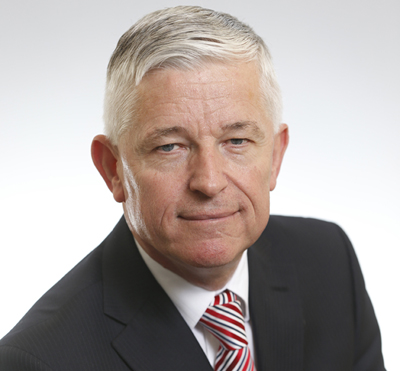
ExecuJet MRO Services is one of the largest business aviation MRO providers in Africa. Mr. Vince Goncalves, Regional VP Africa, ExecuJet MRO Services in this interview with Aviation & Allied Business discussed the trends, challenges and opportunities in the MRO sector in Africa amongst other pertinent issues in the African aviation sector.
Q: What are some of the notable trends you have observed in the MRO sector in Africa?
A: I think the notable trends in Africa would be expansion, mainly. I think existing MROs are already looking to expand their businesses to other products and those who have a charter company are looking to start their own MRO facilities in the interest of being self-reliant in their businesses. So, I would think that MROs are expanding their capabilities because of the number of aircraft available for maintenance in Africa.
Q: Looking from your vantage position as ExecuJet MRO Services, which part of Africa do you have most of your business coming from?
A: I would say below the equator is where we get most of our businesses from: West Africa, East Africa and Central Africa. So, a lot of our business is from those areas.
Q: What are the challenges you see with regards to MRO services in Africa and what are the opportunities you see?
A: Well, looking at the challenges, obviously, we need the volumes to be able to expand. If you observe the trends in business aviation (flight routes, MROs etc.) you’ll see it goes from America to Europe, the Middle East and off to the Kuala Lumpur or Singapore area. So, South Africa is not an overnight stop country. We need to diversify; we need to make sure that we become experts in our products. We need to make sure that we expand on the knowledge side, not necessarily on product types.
And then knowing your customer. There are a lot of customers in Africa that have high expectations (in terms of MRO services) owing to the various business jets they fly. For example, the long-range jets such as the Dassault Falcon 8X, Global 6000 & Gulfstream G650, and light and mid-sized jets, etc. are popular aircraft types in Africa.
And, if we can provide the service and quality, that will be our advantage in the market.
However, challenges such as getting spare parts and maintenance equipment to South Africa or other parts of Africa is a lot more difficult because of the freighters coming into Africa are a lot less than those to other parts of the world.
Q: Tell us about ExecuJet MRO Services South Africa including the types of services you render?
A: ExecuJet MRO Services is one of the largest business aviation MRO providers in Africa. We have been in the market for over 33 years and provide key maintenance solutions, such as airframe, line, and base maintenance, and avionics, modification and upgrades, AOG and much more for all business aircraft. We provide deep-level maintenance which is up to and including the heaviest C-checks, and we also do line maintenance for aircraft.
Our aircraft repertoire includes Dassault, Bombardier, Embraer, Hawker business jets and various types of Turboprops. Since we are a multi-OEM, we have the advantage of having skill depth within our organization. We concentrate on the quality of aircraft service delivery rather than quantity.
Q: Do the different regulatory standards from various African countries affect the delivery of your services to your clients?
A: No, it does not affect us because of our high standards of compliance, being a global organization. It’s not very difficult for us to communicate, liaise and comply with the various national civil aviation authorities around Africa because we maintain high international high standards. We are also certified by the US FAA which many civil aviation regulators around the world follow. Our compliance department, on a regular basis, is audited by different African regulators, so we comply, and we make sure that we are always in line with the expectations.
Q: Technology keeps advancing, including Predictive Maintenance and AI, amongst others. How have you integrated these technologies into your operations at ExecuJet?
A: Because we represent some of the largest and most successful aircraft manufacturers, it’s necessary for us to keep up with technology through continuous learning and training. Whenever a new aircraft model enters into service, the aircraft manufacturers, engine makers and system suppliers request us to send our engineers for type training, so we are updated on the latest technology and best practices. For instance, Africa will receive its first Dassault Falcon 6X in this year’s first half and our engineers have already been trained and type certified for the aircraft. We have already invested in tooling and received US FAA approval to provide line maintenance on the aircraft.
Q: Talking about more advancement in technologies, would you say that from your own position that in Africa, you have more of these advanced technologies being integrated into our MRO processes.
A: It’s up to the MROs around Africa to keep up with these technologies. I cannot speak for them, but ExecuJet MRO Services will continue keeping up with the latest technology as stipulated by the OEMs. Our MRO, for example, is paperless now that maintenance records are now updated and kept digitally.
Q: From your previous answer, you spoke about the OEMs making sure that your people are up to date with technology. How do you make sure that your technicians are up to date with the latest technology to ensure better delivery of service to your clients.
A: Being a corporate company, there is a budget that aligns with our planning departments. We, more or less, know the products that are expected to come in, the products there are in the region, and our customer base. It’s important for us to make sure that our engineers are constantly type-trained to align themselves with the new products and our capabilities. We are also being audited by many regulatory authorities around Africa; so, it is important that we stay trained, which is an expectation in the industry.
Q: Skill shortage is a major issue in the aviation industry. How would you describe the issue of skill shortage in your sector?
A: There is most certainly a shortage of engineers. Obviously, ExecuJet MRO Services, which is committed to service excellence, makes sure that we have trained engineers. Our engineers train regularly across the product types we service.
We also have an apprentice program where we align ourselves with training institutions locally. And every second year, we, on a rotational basis, bring in new apprentices through the system and train them internally where they qualify as technicians and then go on to be product specific. These technicians are then also trained internationally.
Q: Do you have any projects that especially targets young African women, maybe young South African women who may want to come into the industry.
A: Yes, we do have them, and we have young African women who are currently engineers at our facility.
Q: That’s good to hear. Globally, we talk about supply chain issues significantly affecting MROs, aircraft deliveries and all that. What is your take on this?
A: Supply chain issues will always be there because of the world demand. If it’s not parts-specific, it’s materials-specific. In all industries, there is a shortage of certain materials for manufacturing specialized parts. It is very difficult for manufacturers to get hold of some of the materials.
Having said, I think that aviation has come a long way since COVID, and we are starting to get back on track with parts supply, but it remains an issue.
Also, the MRO business is a volume business. We are better positioned than many other MROs in Africa, because we have a higher volume of airframe maintenance work and are part of a big global MRO network. It means we have some negotiating power with the OEMs and parts suppliers. Our relationship with our suppliers is generally very good. Our president regularly meets up with OEMs. And I think that it’s important to make sure that your relationships are strong with suppliers so that they know what your expectations are.
Q: Considering that your MRO is more focused on business aircraft, what do you think are the differences between the MRO services to business aircraft and then MRO services to airlines. Is the pressure the same thing?
A: I don’t have a lot of experience in the commercial industry, but using my knowledge, I would say that commercial operators are purchasing aircraft so they can fly as much as possible and carry as many passengers. Having those aircraft on the ground for maintenance is not good for them. I think there’s a lot of pressure on the MROs to get those aircraft serviceable.
However, in business aviation, the customer may not fly as often, but the availability of the aircraft needs to be almost 100% because if the customer has to fly commercial because his aircraft is in the MRO facility, he’s going to question why he has a private aircraft. Having said, I think the pressures are there on both sectors. They just have different sources, which are either from the aircraft owner or from the commercial passengers.
Q: Which areas do you think the MRO service providers in Africa need to adapt?
A: I think the maintenance service providers in Africa need to make sure they adapt to the regulatory changes. A lot of MROs seem to think that it’s something that can be done later, but I think they need to adapt to what the industry requires. They need to focus on quality, compliance and ensure they have the correct resources. As mentioned earlier, a lot of these MROs are expanding into different products, but then you need to make sure you have the resources to be able to support that capability within your organization.